

SPORT, PERFORMANCE AND RECOVERY
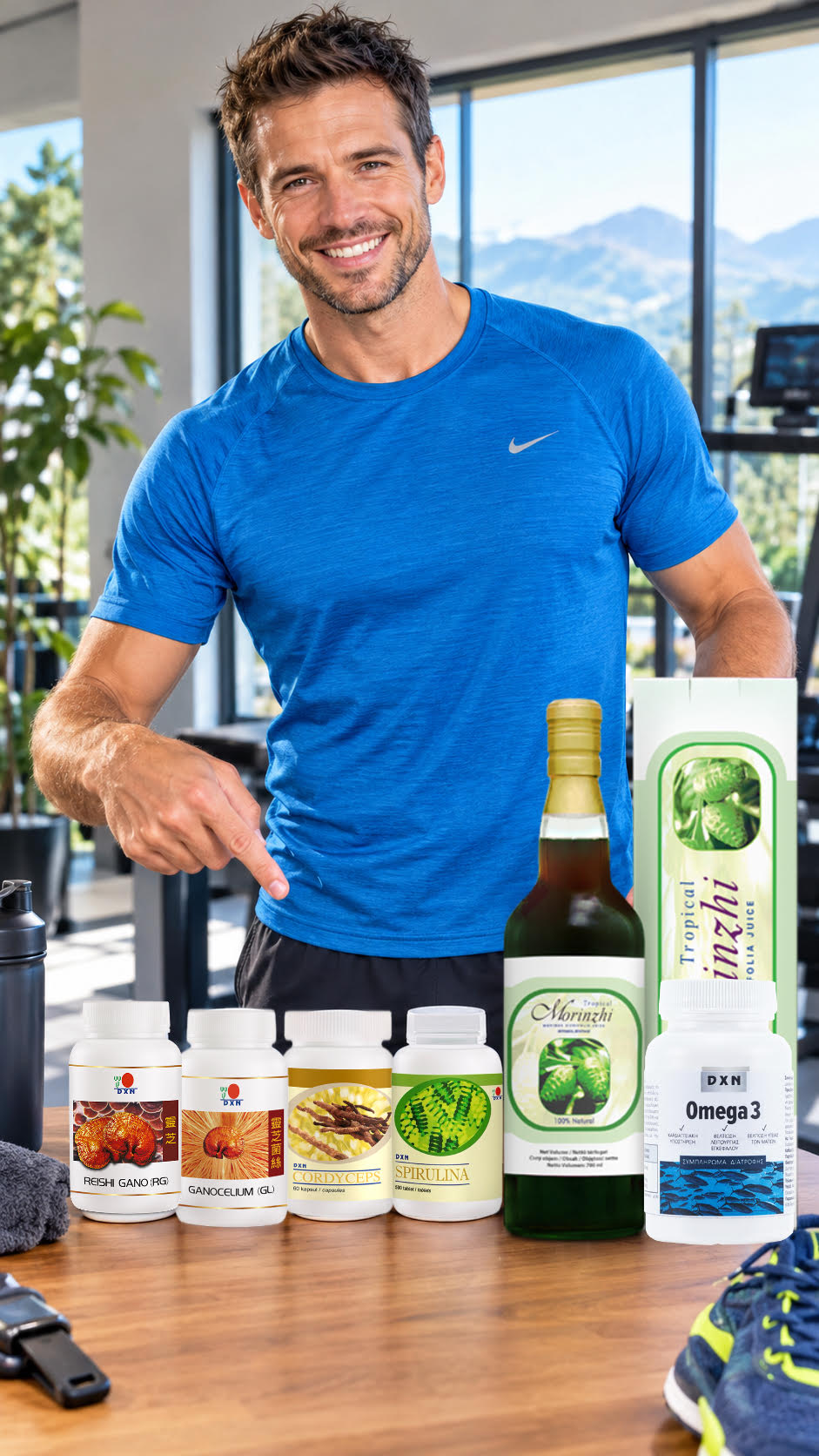
Why Should Athletes Pay Attention to DXN Nutritional Supplements?
Introduction: Performance Is More Than Training
Athletic performance depends on much more than physical training alone. Nutrition, sleep, hydration, recovery and mental well-being all play important roles in an athlete’s ability to perform consistently.
During intensive exercise, the body uses energy, places demands on the muscles and cardiovascular system, and must recover between training sessions. A balanced diet provides the foundation for these processes, while selected nutritional supplements may help athletes meet their nutritional needs.
DXN offers a range of products derived from mushrooms, microalgae, fruits and other natural ingredients. Among the products that may be of interest to physically active people are Ganoderma RG and GL, Cordyceps, Spirulina, Omega-3 and Noni.
But what are these products, what do they contain, and what does scientific research actually tell us about their potential relevance to sport?
Let’s examine each of them.
1. GANODERMA RG AND GL – THE REISHI MUSHROOM
Ganoderma lucidum, commonly known as Reishi or Lingzhi, is a mushroom that has been used in traditional Asian practices for centuries.
It contains several biologically active compounds, including polysaccharides and triterpenes. These substances have attracted scientific interest because of their possible biological effects.
DXN offers different Ganoderma preparations, including RG and GL. They represent different parts or preparations of the mushroom and are used as dietary supplements.
Why might Ganoderma be interesting to athletes?
Physical exercise places demands on the body. Training, recovery, sleep and nutrition all influence how an athlete adapts to these demands.
Researchers have investigated Ganoderma compounds in laboratory and animal studies, including their antioxidant and immunological effects. However, findings from these studies cannot automatically be applied to people.
There is currently insufficient high-quality human evidence to conclude that Ganoderma reliably improves athletic performance, increases endurance or accelerates recovery in athletes.
Nevertheless, Ganoderma may be of interest to people who want to learn more about mushroom-derived nutritional supplements and their potential role in a balanced lifestyle.
The important point: Ganoderma should not be regarded as a substitute for proper nutrition, adequate sleep, structured training or medical treatment.
2. CORDYCEPS – A MUSHROOM STUDIED FOR ITS POTENTIAL RELATIONSHIP WITH PHYSICAL PERFORMANCE
Cordyceps is a group of fungi with a long history of traditional use in parts of Asia.
It has attracted attention in sports nutrition because researchers have investigated whether certain Cordyceps preparations might influence energy metabolism, oxygen utilisation or exercise performance.
Why are athletes interested in Cordyceps?
During exercise, muscles require energy. The body must continually produce ATP, the molecule used to power cellular processes.
Researchers have explored whether certain Cordyceps preparations could influence processes involved in energy production and exercise capacity.
Some preliminary studies have reported potentially interesting findings. However, results have not been consistent, and the available human evidence remains limited.
The effects may also depend on the specific Cordyceps species, preparation, dosage, duration of use and characteristics of the participants.
It is therefore not scientifically justified to promise that Cordyceps will increase stamina, improve oxygen uptake or make every athlete perform better.
For athletes: Cordyceps is an interesting subject of nutritional research, but it should be viewed as a possible dietary supplement rather than a proven performance-enhancing product.
3. SPIRULINA – A NUTRIENT-RICH MICROALGA
Spirulina is a blue-green microalga, more precisely a type of cyanobacterium, that is widely used as a dietary supplement.
It contains protein and various micronutrients and pigments. Its nutritional composition makes it an interesting option for people who want to diversify their diets.
Why might Spirulina be relevant to sport?
Athletes need sufficient energy and nutrients to support training and recovery. Protein is important for maintaining and building muscle, while vitamins and minerals contribute to normal body functions.
Spirulina can contribute protein and other nutrients to the diet. However, the amount supplied depends on the portion consumed, and a supplement should not automatically be considered a complete replacement for a varied diet.
Some studies have investigated Spirulina in relation to exercise performance, fatigue and markers of oxidative stress. Although certain results have been encouraging, the overall evidence is not strong enough to guarantee a meaningful improvement in athletic performance.
What should athletes consider?
Choose products from reputable manufacturers.
Follow the recommended serving instructions.
Remember that the nutritional contribution depends on the actual quantity consumed.
Maintain a varied diet with sufficient protein, carbohydrates, healthy fats, vitamins and minerals.
Spirulina may be a useful addition to a balanced nutritional routine, but it is not a substitute for an appropriate sports diet.
4. OMEGA-3 – IMPORTANT FATTY ACIDS FOR NORMAL BODY FUNCTION
Omega-3 fatty acids are essential components of a healthy diet. The main types commonly discussed in nutrition include ALA, EPA and DHA.
ALA is found in foods such as flaxseed, chia seeds and walnuts. EPA and DHA are found primarily in oily fish and certain marine oils.
Why should athletes pay attention to Omega-3?
Omega-3 fatty acids have several important physiological roles.
For example:
EPA and DHA contribute to the normal function of the heart.
DHA contributes to the maintenance of normal brain function.
DHA also contributes to the maintenance of normal vision.
The authorised health claims apply under the relevant conditions of use and depend on adequate intake.
Researchers have also studied Omega-3 in relation to muscle function, exercise-induced soreness, inflammation-related processes and recovery. Some studies suggest possible benefits in particular circumstances, but the findings are mixed.
It would therefore be an exaggeration to claim that Omega-3 invariably prevents muscle soreness or accelerates recovery after every training session.
The practical approach
Athletes should aim to obtain adequate Omega-3 through their diet. Supplements may be useful when dietary intake is insufficient or when a healthcare professional recommends them.
People taking anticoagulant medication should seek professional advice before starting Omega-3 supplements, particularly at higher doses.
5. NONI – A TROPICAL FRUIT WITH A TRADITIONAL HISTORY
Noni, scientifically known as Morinda citrifolia, is a tropical fruit traditionally used in several regions of the world.
Noni products are available in different forms, including juices and dietary supplements. The fruit contains a range of naturally occurring compounds that have attracted scientific interest.
Why might Noni interest active people?
People interested in natural nutrition often explore fruits and plant-derived products as part of a varied diet.
However, traditional use does not by itself establish that a product improves athletic performance or provides a specific health benefit.
Scientific evidence supporting claims that Noni increases stamina, speeds up recovery or improves sports performance remains limited.
Noni should therefore be considered a dietary product rather than a proven sports-performance supplement.
People with medical conditions, particularly kidney problems, should consult a healthcare professional before using Noni products. Some Noni products may contain substantial amounts of potassium, and the composition varies by product.
6. WHY DO SOME ATHLETES COMBINE DIFFERENT NUTRITIONAL SUPPLEMENTS?
A balanced diet needs to supply a range of nutrients. For this reason, some people choose to use several dietary supplements rather than relying on a single product.
The DXN products discussed in this article have different compositions:
ProductMain area of nutritional interestGanoderma RG and GLMushroom-derived compounds, including polysaccharides and triterpenesCordycepsA fungus studied for possible relationships with energy metabolism and exercise performanceSpirulinaProtein and other nutrients found in a nutrient-rich microalgaOmega-3Essential fatty acids with established roles in normal body functionNoniA tropical fruit containing various naturally occurring compounds
These products are not interchangeable, and combining them does not automatically produce greater benefits.
There is also insufficient clinical evidence to conclude that taking all five products together produces a particular improvement in strength, endurance, immunity or recovery.
The most sensible approach is to consider each product individually, assess whether it meets a genuine nutritional need, and avoid unnecessary duplication.
More supplements do not necessarily mean better results.
7. WHICH ATHLETES MIGHT BE INTERESTED IN THESE PRODUCTS?
People involved in different forms of physical activity have different nutritional requirements.
Endurance athletes
Runners, cyclists, swimmers and other endurance athletes need adequate energy, carbohydrate intake, hydration and recovery.
Spirulina and Omega-3 may be of nutritional interest, depending on the athlete’s overall diet. Cordyceps is also being investigated in relation to exercise performance, but the evidence is not conclusive.
Strength and fitness training
People who participate in resistance training need sufficient energy and protein to support muscle maintenance and development.
Spirulina can contribute some protein, but athletes should consider their total daily protein intake rather than relying on a small serving of an algae supplement.
Ganoderma and Cordyceps should not be promoted as proven methods for increasing muscle mass or strength.
Recreational athletes
People who exercise for general fitness may benefit most from the basics: a balanced diet, regular activity, adequate sleep and a training programme suited to their abilities.
Dietary supplements may have a role when they help address specific nutritional needs, but they are not essential for everyone.
Older adults who remain physically active
Maintaining physical activity, muscle function and a varied diet becomes increasingly important with age.
Older adults should pay particular attention to adequate protein, vitamin and mineral intake, hydration and recovery. Supplements should be chosen according to individual needs, medication use and advice from a healthcare professional when appropriate.
8. RECOVERY – THE OFTEN-OVERLOOKED PART OF TRAINING
Training provides a stimulus. Adaptation takes place through the interaction of exercise, nutrition and recovery.
Without sufficient recovery, additional training may not produce the desired results and can increase the risk of fatigue or injury.
Important factors include:
Sleep: Sufficient, good-quality sleep supports normal physical and mental functioning.
Nutrition: Adequate energy, protein, carbohydrates, fats, vitamins and minerals help meet the body’s needs.
Hydration: Fluid intake should reflect exercise intensity, duration and environmental conditions.
Training management: Training load should increase appropriately, with sufficient rest between demanding sessions.
Consistency: Long-term habits generally matter more than any individual supplement.
Nutritional supplements can contribute to a broader nutrition plan, but they cannot compensate for persistent sleep deprivation, inadequate food intake or excessive training.
9. WHAT DOES SCIENTIFIC RESEARCH SAY?
It is important to distinguish between traditional use, laboratory findings, preliminary human studies and strong clinical evidence.
A substance may show interesting biological activity in a laboratory without producing the same effect in the human body. Likewise, a small study reporting a positive result does not establish that the effect is reliable or applies to all athletes.
Omega-3
Omega-3 fatty acids have established nutritional roles, and some authorised health claims are supported by substantial evidence. Research into their specific effects on athletic recovery and performance is more mixed.
Spirulina
Human studies have investigated possible effects on exercise performance, fatigue and oxidative-stress markers. Some results are promising, but differences between studies mean that firm conclusions about performance benefits cannot be drawn.
Cordyceps
Cordyceps has been investigated for possible effects on exercise capacity and energy metabolism. However, studies vary in design, preparation and participant characteristics. The evidence is not sufficient to guarantee improved performance.
Ganoderma
Ganoderma contains compounds that have been studied extensively in laboratory settings. More robust human research is needed to establish whether these findings translate into meaningful benefits for athletes.
Noni
Research into Noni’s potential health effects is ongoing, but there is insufficient evidence to establish that it reliably improves athletic performance or recovery.
The overall conclusion
The scientific evidence does not support treating all these products as proven performance enhancers. Their potential relevance differs, and evidence for one ingredient cannot automatically be applied to another product or to a combination of products.
For athletes, the priority should remain a well-planned diet, appropriate training, sufficient recovery and the targeted use of supplements when there is a clear reason to use them.
10. QUALITY, SAFETY AND RESPONSIBLE USE
When choosing a dietary supplement, the quality and safety of the product matter as much as the ingredient itself.
Athletes should consider the following:
Buy from reputable suppliers.
Follow the product label and recommended serving.
Check the ingredient list and any relevant warnings.
Discuss potential interactions with a pharmacist or doctor if taking medication.
Do not use supplements as a replacement for prescribed treatment.
Be cautious of claims promising guaranteed results or the prevention or treatment of diseases.
Important information for athletes subject to anti-doping rules
Athletes who compete under anti-doping regulations should be particularly careful when using supplements.
Contamination or undeclared ingredients can create a risk of an adverse analytical finding. A product’s natural origin or a manufacturer’s reputation does not, by itself, guarantee that it is free from prohibited substances.
Competitive athletes should consult their sport’s anti-doping guidance and consider products that have been independently tested under a recognised sports-supplement certification programme. No certification removes every possible risk.
Important information about medication
Dietary supplements can interact with medicines or may be unsuitable for people with certain medical conditions.
People taking anticoagulants, including rivaroxaban (Xarelto), should consult their doctor or pharmacist before adding new supplements, particularly products that may influence bleeding risk or interact with treatment.
Do not stop or change prescribed anticoagulant medication to accommodate a dietary supplement without the prescribing clinician’s instructions.
CONCLUSION: A SMART APPROACH TO SPORT AND NUTRITION
Sporting performance is built on a combination of training, nutrition, sleep, recovery and consistency.
DXN offers several products that may interest people who want to explore mushroom-derived supplements, microalgae, fruit products and essential fatty acids.
Ganoderma RG and GL provide preparations derived from Reishi mushroom.
Cordyceps is a fungus being studied for its possible relationship with exercise performance.
Spirulina provides protein and other nutrients.
Omega-3 supplies fatty acids that play important roles in normal body function.
Noni is a tropical fruit used in traditional practices and available in dietary supplements.
The scientific evidence differs from one product to another. Some nutritional roles, such as those of Omega-3, are well established, while claims about improvements in athletic performance from Ganoderma, Cordyceps, Spirulina or Noni require more research.
The goal should not be to replace sound training and nutrition with supplements. It should be to make informed decisions and use products responsibly when they are appropriate for individual needs.
Train consistently. Eat well. Recover properly. Make informed choices.
Important notice
Dietary supplements are intended to supplement the diet and are not a substitute for a varied, balanced diet and a healthy lifestyle. The products discussed here are not medicines and should not be used to diagnose, treat, cure or prevent disease. The information in this article is educational and is not a substitute for individual medical advice.